Haven Methodist Church
The TommyknockersHaven Methodist Church is both a place of worship and a recurring stage for Haven’s public life. Its history reaches back to a 1900 revival that helped rename the town, while its bells later call the community to Ruth McCausland’s funeral. The contrast is telling: the church’s ceremonies can embody collective devotion, but the town’s religious language also preserves the legacy of a revival whose promise of sanctuary was bound up with exploitation and self-interest.
Congregation and the 1900 Revival
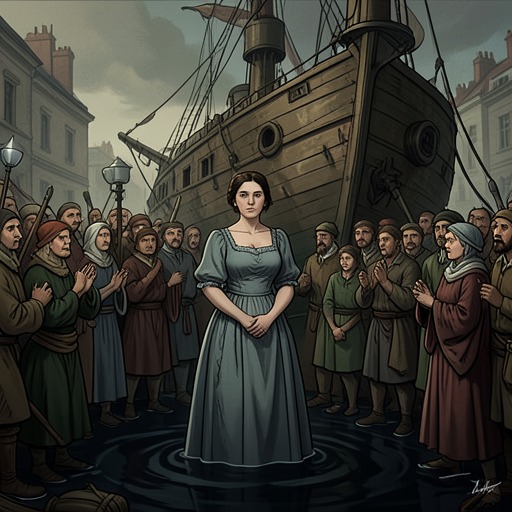
In 1900, the Methodist ministry in Ilium was served by Mr. Hartley, who also ministered to Troy. He shared the local religious landscape with the Baptist Reverend Crowell, whose pastoral circuit included Ilium, Troy, Etna, and Unity. When the fast-talking preacher Colson arrived and pitched his tent in Ilium instead of Derry, he won much of the town’s Christian population with a lively version of the faith. Hartley and Crowell protested his influence, but their exhortations were voices crying in the wilderness as the congregation around Colson continued to grow.
Colson’s revival joined harvest imagery to claims of divine favor. On a hot August night, after stripping off his frock coat, he preached that the town was sanctified and called it a haven, a place suggestive of the land Adam and Eve knew before the Fall. His audience answered with an amen. The sermon’s religious language had a practical consequence: Colson argued that a town promising God’s harvest and haven should not bear the name Ilium, which he disparaged as the name of a foreigner. The following day, talk began of changing the town’s name to Haven.
Hartley opposed the proposal more strongly than Crowell, who protested listlessly. The town’s selectmen remained neutral, noting the costs of changing the incorporation papers in Augusta and the municipal road signs. Before the March 1901 town meeting, however, Colson had left. After promoting a “love-offering” at his final revival meeting, he disappeared during the night of September 7, 1900. The narrative makes the church’s founding association inseparable from this contradiction: Colson preached harvest and sanctuary, but exploited the trust and desire surrounding his meetings for money and sexual access. The change he inspired outlasted his presence.
The Name’s Cost
Colson’s departure did not end the consequences of his revival. Nine children were born in the area between the beginning of 1901 and the late-March town meeting; the account describes them as illegitimate children and notes that all had thick black hair, with six having blue eyes. On March 27, the town discussed and approved changing its name from Ilium to Haven. Two days later, Paul Clarendon killed his newborn son and his wife with a straight razor, then took his own life. The account places the family deaths directly after the vote, making the town’s new name emerge amid human cost rather than uncomplicated religious triumph.
The Methodist church’s connection to this history is carried by Hartley, who opposed changing the town’s name to one proposed by a man he regarded as a thief, fornicator, false prophet, and snake in the grass. He attended the town meeting expecting Article 14 to be rejected, but the discussion was brief and the vote went the other way. The congregation’s religious establishment was therefore not identical with Colson’s revival: Hartley resisted him. Yet the town’s lasting name came from the revival preacher’s appeal to harvest, holiness, and haven, despite the objections of the local minister.
Bells and Ruth McCausland’s Funeral
Much later, Haven Methodist Church becomes the setting for Ruth McCausland’s funeral. The bells that summon the mourners are not the familiar bells Ev Hillman expected. Reverend Goohringer, tired of the church’s old gonging, has rewired the basement fuse box to power a programmable carillon. For Ruth’s funeral, he selects hymns she had particularly loved, including “What a Friend We Have in Jesus” and “This Is My Father’s World.” The new bells send people toward the church in twos and threes, turning a technological alteration into a public call to gather.
The service is carefully ordered: hymns, prayer, Scripture, more hymns, and then Goohringer’s eulogy. Ruth’s favorite passage, the Beatitudes, is read before he begins. Summer flowers surround the lectern, and the congregation listens beneath stained-glass light. Goohringer takes pride in sending Ruth off in style, and the bells and liturgy give the community a recognizable language for mourning her.
But the congregation does not consist of a single, unified group. The townspeople appear healthy, while outsiders are pale and dazed; some leave the service to be sick, and others endure continuing nausea. The funeral thus places ordinary ritual beside evidence of the town’s altered condition. The church gathers mourners, but the gathering also exposes a divide between Haven’s residents and those who have come from outside.
Religious Objects and the Changing Town
The novel repeatedly gives religious forms an uncanny role beyond the church building. A stereoscopic portrait of Jesus, kept atop the Paulsons’ television for years, speaks to ’Becka and reveals Joe Paulson’s infidelity. Its domestic setting turns a familiar devotional image into a source of disturbing knowledge: Jesus walks within the picture and tells her that Joe is having sex with a woman at the post office. In another scene, a kachina doll accompanies a chalkboard message declaring that David Brown is on Altair-4. Religious and spiritual objects are not merely decoration; they become channels through which hidden facts and dangers enter ordinary life.
That capacity for knowing also changes how the people of Haven understand themselves. On the day the Paulsons’ house burns, Ruth recognizes that she and others have been knowing things they had no right to know for a week or more. The knowledge has felt as natural as a heartbeat, but she realizes that it is changing the town for the worse. When residents join their minds to search for David, the combined mental call could reach him at great distance, yet they know he is not simply lost: he is “not-there.” These episodes place communal knowledge, faith, and the uncanny in uneasy proximity.
Late in the story, Bobbi Anderson explains that the names Tommyknockers and Altair-4 are only labels imposed on things and places that exist beyond familiar categories. The explanation unsettles any easy distinction between religious naming and other ways of naming the unknown. Colson’s language once gave Ilium a new identity by calling it a haven; later, the town’s supernatural changes make the limits of names and shared belief newly visible. Haven Methodist Church stands within that history as a real congregation, a setting for public mourning, and a place where inherited religious forms gather a community whose outward rituals cannot conceal what has changed within it.